Guide
Understanding your EPC — in plain English.
What the bands mean, what each section of the certificate is telling you, how the score is worked out and what the law expects of you. Ten minutes well spent before you sell, let or improve.
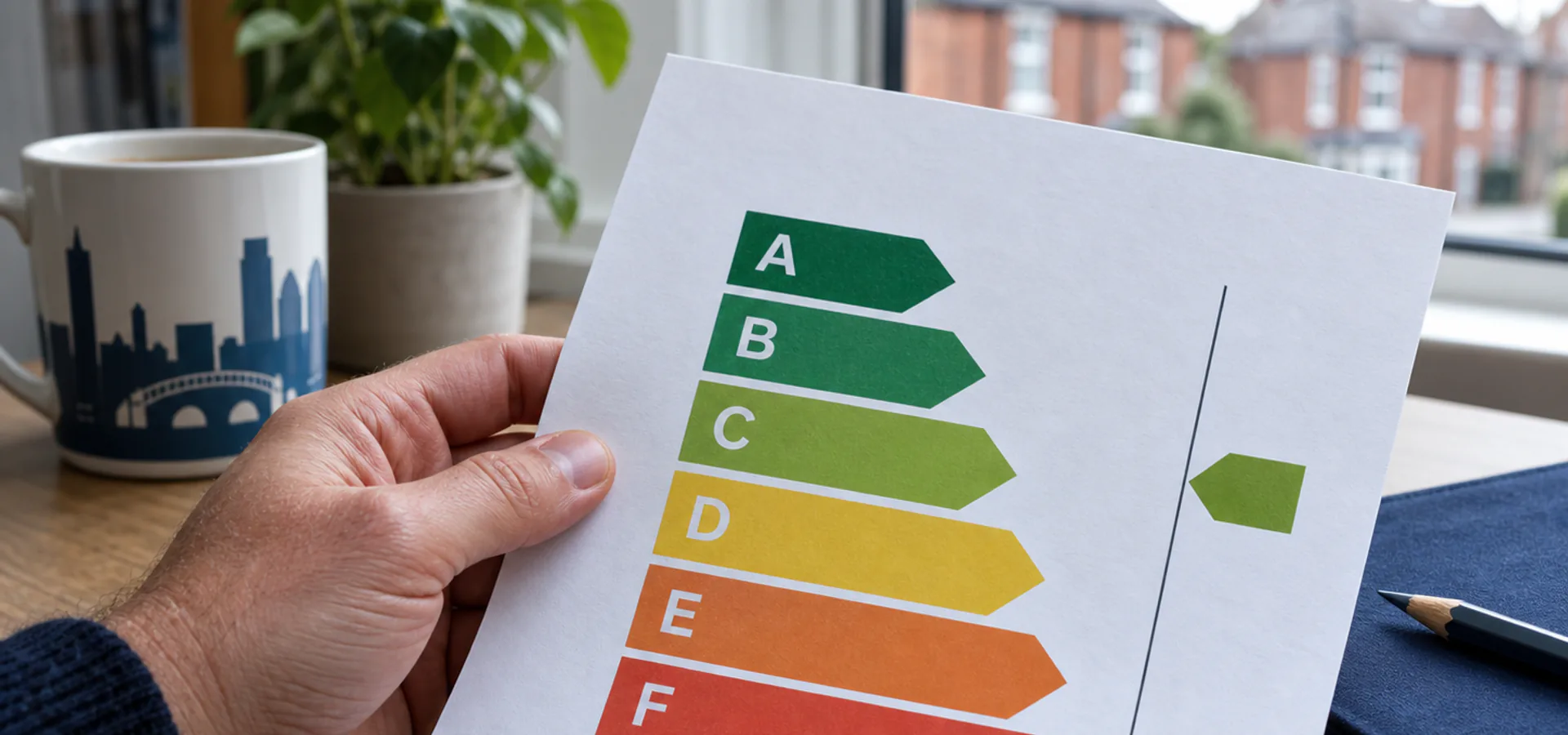
The A–G scale
Seven bands, one score out of 100.
The score reflects modelled running costs per square metre under standard conditions — so the rating compares properties fairly regardless of who lives there.
Tap a band to explore it
Score 55–68
Average — the most common UK rating
- Typical homes
- Typical 1930s–1980s semis and terraces with some insulation and an older boiler.
- Running costs
- Around the national average.
- If you let the property
- Legal to let today; below the proposed C standard — plan improvements.
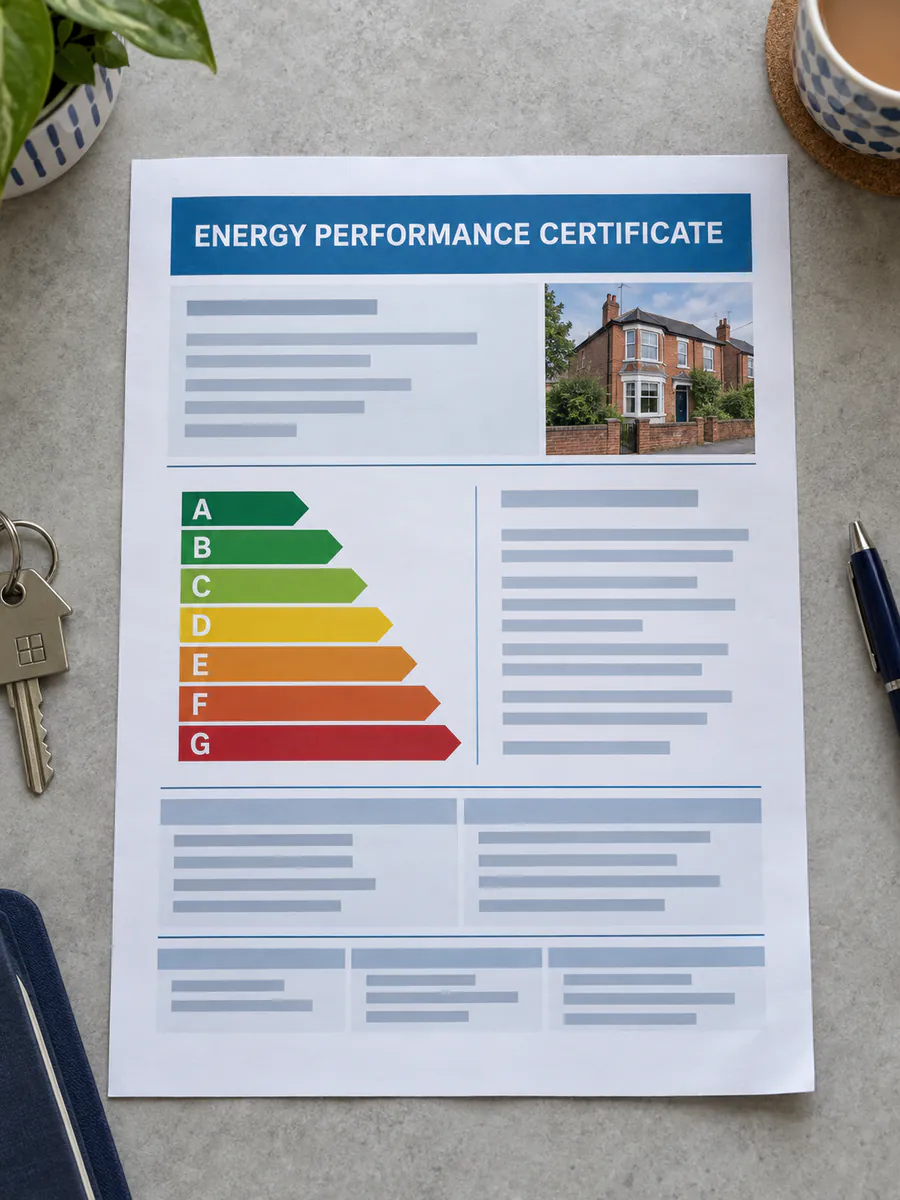
Anatomy of a certificate
What each section is telling you.
- 01
Energy rating and score
The headline band (A–G) and the numerical score out of 100 that puts you inside it.
- 02
Potential rating
What the property could achieve if the listed recommendations were carried out.
- 03
Estimated energy costs
Modelled three-year costs for heating, hot water and lighting under standard conditions — not your actual bills.
- 04
Breakdown of features
Walls, roof, floor, windows, heating, controls, hot water and lighting each rated from very poor to very good.
- 05
Recommendations
Improvement measures with indicative costs, typical savings and the rating you'd reach after each one.
- 06
Environmental impact
Modelled carbon dioxide emissions and the potential reduction after improvements.
- 07
Validity and reference
Lodgement date, ten-year expiry, the certificate reference number and the assessor's accreditation details.
Behind the number
How the score is calculated.
The assessor doesn't award points by opinion. Every input feeds a Government model that estimates how much it would cost to heat, light and provide hot water for the property under standard occupancy.
Heat loss
Wall, roof, floor and window construction, insulation and the property's size and shape.
Heating efficiency
The main heating system's efficiency and fuel, plus controls such as thermostats and TRVs.
Hot water & lighting
How hot water is produced and stored, and the share of low-energy lighting.
Renewables & ventilation
Solar PV, solar thermal, batteries and mechanical ventilation reduce modelled costs.
Fuel prices
Standardised prices, so ratings compare fairly — your actual bills will differ.
Floor area
Costs are calculated per square metre, so a large efficient home and a small efficient flat can share a band.
The rules
Legal quick reference for England & Wales.
A summary, not legal advice. Penalties are the maximums set by the regulations at the time of writing.
| Situation | What's required | Penalty / note |
|---|---|---|
| Selling a home | Valid EPC required before marketing; provided free to prospective buyers. | £200 fixed penalty for non-compliance |
| Letting a home | Valid EPC rated E or above (unless exempt) before a new tenancy; copy to the tenant. | Up to £5,000 per property under MEES |
| Selling or letting commercial | Valid non-domestic EPC before marketing; minimum E to let. | 12.5% of rateable value (£500–£5,000) for no EPC; up to £150,000 under MEES |
| New build | EPC produced from the as-built SAP calculation before completion. | Handled by the developer's assessor |
| Listed buildings | Only exempt where meeting minimum standards would unacceptably alter character — get advice. | Exemption is not automatic |
Glossary
The jargon, decoded.
Every EPCExpress certificate comes with a one-page plain-English summary, so you won't need this page to understand yours.
Questions
Guide questions
Something else on your mind? Browse all FAQs or ask us directly.
An Energy Performance Certificate rates a property's energy efficiency from A (most efficient) to G (least efficient) and lists cost-effective improvements. In England and Wales you need a valid EPC when a property is built, sold or let, and it must be available to prospective buyers or tenants from the moment the property is marketed. Certificates last 10 years.
Want the rating explained for your own property?
See our improvement advice serviceUnderstood
Now get the certificate that goes with it.
Book an accredited assessor with a fixed price and a plain-English summary included.